 MON – FRI: 7AM TO 4:30PM | SAT: 7AM – 11AM | SUN: Closed
In modern manufacturing, precision and durability are everything. Whether your facility relies on CNC machining, stamping, or heavy industrial tooling, you know that tungsten carbide is the gold standard for cutting tools, dies, inserts, and wear parts. But what happens when those high-performance tools reach the end of their lifecycle?
Instead of letting discarded tooling gather dust in a warehouse or treating it like standard steel scrap, savvy manufacturers turn to specialized scrap recyclers. Finding the right partner for tungsten carbide recycling is essential to recovering significant revenue and boosting your operational bottom line.
Why Not All Scrap Recyclers Handle Tungsten Carbide
If you have ever tried taking carbide inserts or end mills to a general-purpose, local scrap yard, you may have been met with hesitation—or an underwhelming payout. Why? Because not all recyclers are equipped to handle this exotic material.
Tungsten carbide is an extremely dense, refractory metal alloy that requires specialized refining and processing networks. General scrap yards often lack the advanced analytical equipment needed to distinguish high-grade tungsten carbide from standard tool steels or high-speed steel (HSS). Without the ability to accurately grade the metal or direct relationships with downstream alloy processors, general yards either refuse the material outright or offer lowball prices to hedge their own financial risk.
Specialized buyers, on the other hand, understand global commodity demands and have the advanced infrastructure required to process this elite alloy efficiently.
What Manufacturers Should Look for in a Tungsten Carbide Buyer
When your manufacturing facility is ready to offload valuable industrial scrap, partnering with the right buyer makes all the difference. To protect your bottom line, prioritize recyclers who offer:
- Deep Industry Experience: Look for a buyer with a proven track record in handling exotic and high-temperature alloys. Experienced recyclers understand the subtle metallurgical differences between binder types (such as cobalt or nickel binders) and can value your scrap accurately.
- Pricing Transparency: The tungsten market fluctuates based on global supply and demand. A reputable buyer offers transparent, competitive pricing tied directly to current market indices, explaining exactly how your payout is calculated without hidden fees or surprise deductions.
- Robust Volume Capacity: Whether you are a small machine shop generating a few buckets of carbide inserts a month or a large industrial plant moving tons of scrap, your buyer must have the financial and logistical capacity to handle your volume seamlessly and pay promptly.
The Critical Role of Proper Weighing and Material Verification
Because tungsten carbide carries a significantly higher per-pound value than common metals like iron, aluminum, or copper, precision matters during the transaction. Even a minor discrepancy on a scale can cost a manufacturer hundreds or thousands of dollars.
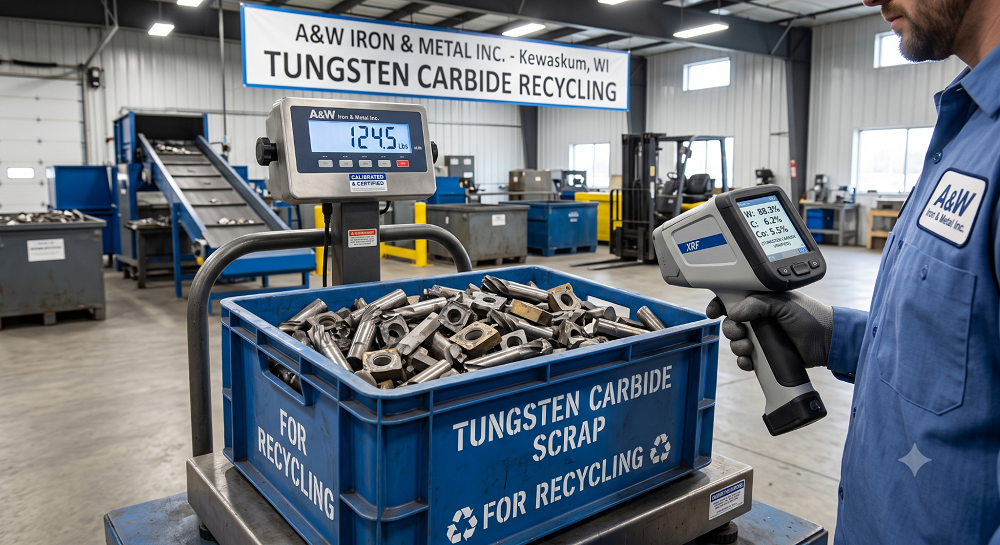
Top-tier industrial scrap buyers invest in State-certified, regularly calibrated scales to ensure every fraction of an ounce is accounted for. Furthermore, they utilize advanced material verification technology, such as X-ray Fluorescence (XRF) analyzers. This non-destructive testing instantly verifies the exact elemental composition of your scrap, confirming its tungsten content and ensuring you are paid the true market value for your specific grade—not a generic, one-size-fits-all estimate.
How Manufacturers Can Prepare Tungsten Carbide Scrap
To maximize your return on investment and streamline the recycling process, taking a few simple preparatory steps before selling your tungsten carbide scrap can make a noticeable difference in your payout:
- Separate by Form: Keep clean cutting inserts, end mills, drills, and dies separate from carbide swarf, sludge, or grinding dust. Solid scrap and particulate forms often command different price points.
- Prevent Contamination: Never mix tungsten carbide with standard carbon steel, stainless steel, or brass. Contaminated loads require extra labor to sort and process, which can lower your overall net payout.
- Clean Off Excess Oils and Coolants: While minor industrial residue is expected, draining off excess machine oils, coolants, and moisture helps ensure you are being weighed and paid strictly for the valuable metal itself.
- Secure Your Scrap: Due to its high monetary value and compact size, store your carbide scrap in sturdy, sealed, and secure containers to prevent loss or theft before pickup or delivery.
Why A&W Iron & Metal Inc. is Your Trusted Partner
When it comes to getting the highest return for your industrial materials, A&W Iron & Metal Inc. in Kewaskum, WI, is your trusted local partner. We combine decades of industry expertise with state-of-the-art material verification technology and transparent pricing to serve manufacturers across the region.
Whether you need reliable commercial container services for recurring manufacturing waste or are looking for the most competitive rates for scrap metal in Wisconsin, our team has the capacity and integrity to handle your needs. Don’t leave money on the table by treating your high-value tooling like ordinary scrap metal in Wisconsin. Partner with recyclers who understand its true worth.
Contact Us Today
Ready to turn your tungsten carbide scrap into working capital? Reach out to A&W Iron & Metal Inc. today for a customized quote or to schedule an industrial pickup for your facility.